
5 Reasons Mobile Occupational Health Services Reduce Downtime on Industrial Job Sites
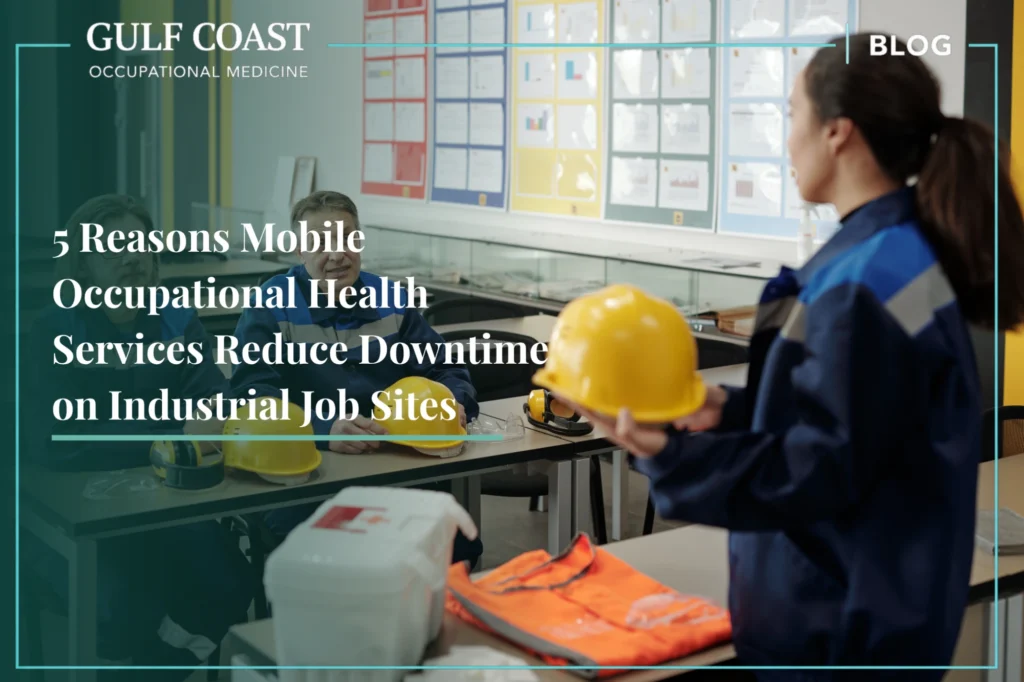
On-site workforce health services help industrial employers reduce travel, streamline testing, support large crews, and protect productivity during turnarounds and shutdowns.
When Does OSHA Require Respirator Medical Clearance?
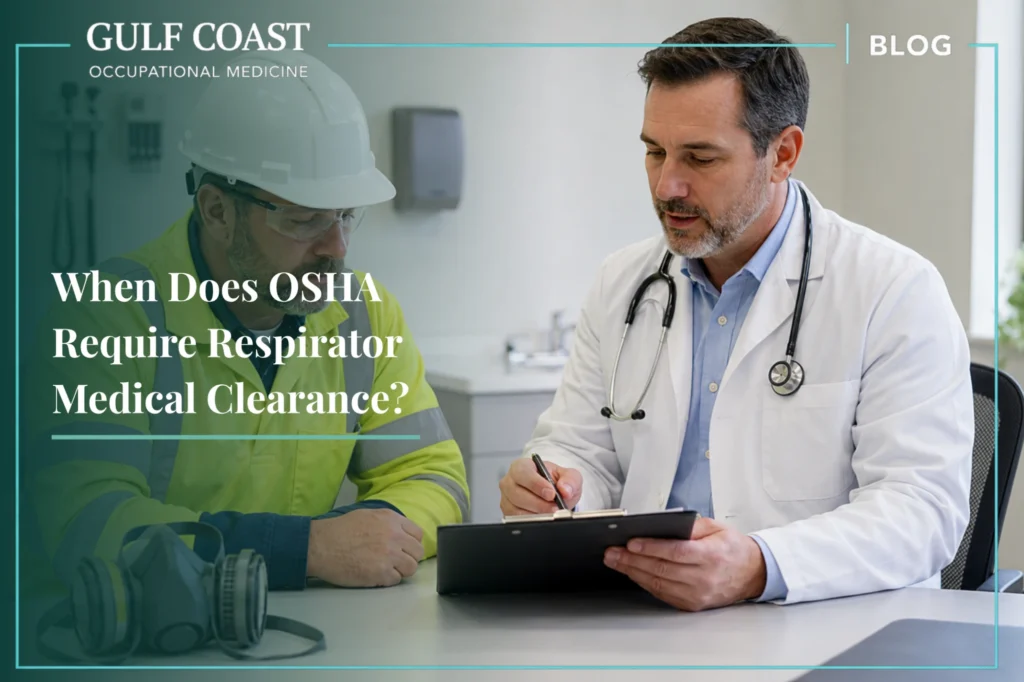
Learn when OSHA requires respirator medical clearance, how it differs from fit testing, and how Baton Rouge employers can avoid costly compliance delays.
Choosing the Right Drug Testing Program for Louisiana Construction Companies

Choose the right Louisiana construction testing program to reduce risk, support compliance, accelerate hiring, and keep safety-sensitive crews productive and work-ready.
Why Baton Rouge Employers Need an Occupational Medicine Partner Instead of an Urgent Care Clinic
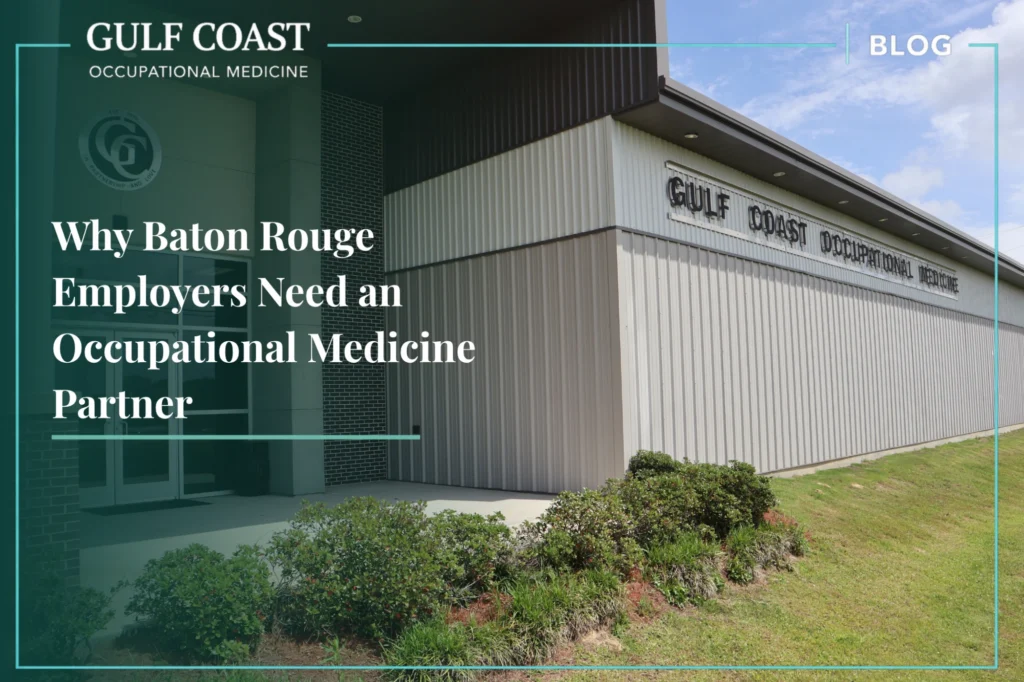
Learn why partnering with an occupational medicine provider instead of an urgent care clinic helps Baton Rouge employers improve workplace safety, compliance, employee health, and overall business productivity.
Everything Louisiana CDL Drivers Need to Know About DOT Physicals
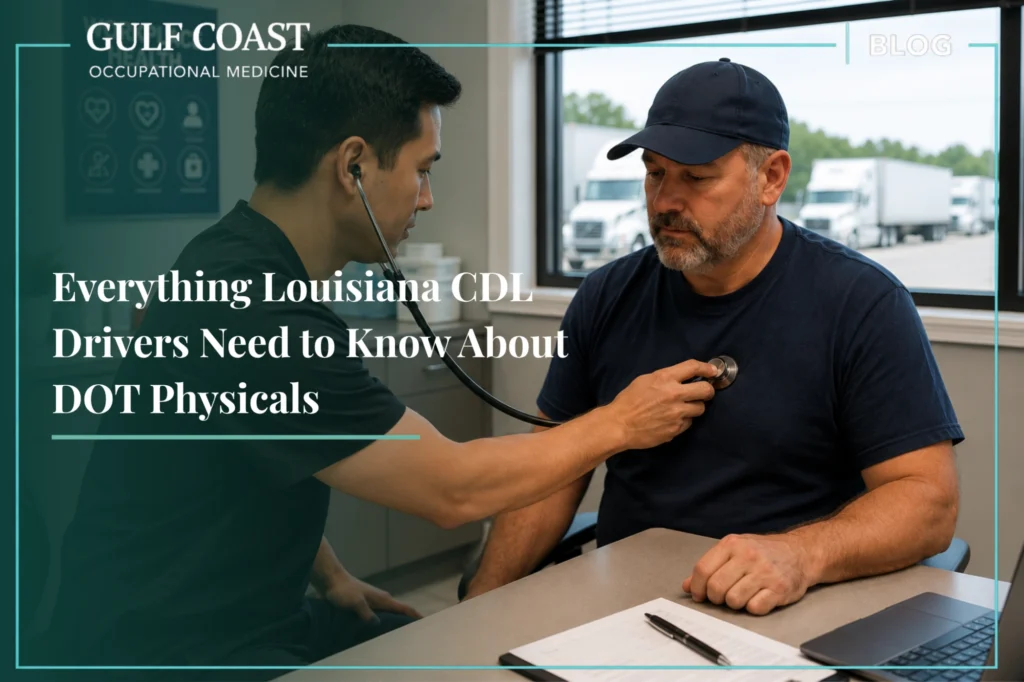
Learn everything Louisiana employers and CDL drivers need to know about DOT physicals, certification requirements, renewals, and why Gulf Coast Occupational Medicine is the trusted occupational health partner in Baton Rouge.
DOT Medical Card Renewal: A Simple Guide for Louisiana CDL Drivers
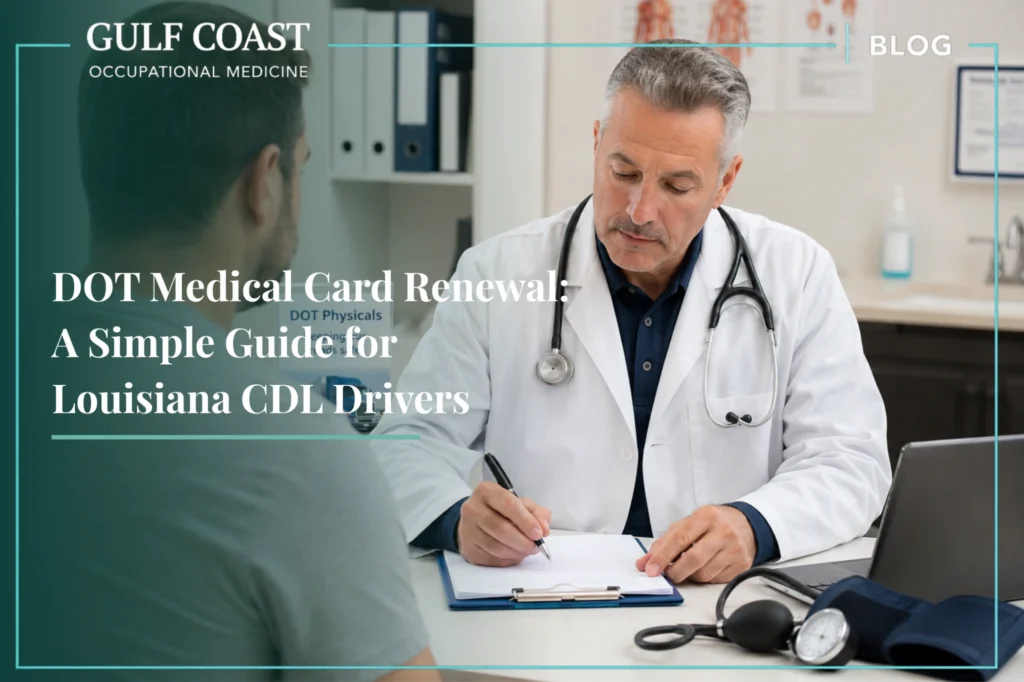
Learn how to complete your DOT medical card renewal Louisiana, understand FMCSA requirements, avoid CDL interruptions, and keep your commercial drivers compliant with help from Gulf Coast Occupational Medicine.
Random Drug Testing vs. Reasonable Suspicion Testing: What’s the Difference?

Learn the differences between random drug testing and reasonable suspicion testing to improve compliance, reduce workplace risks, and maintain a safer, more productive workforce.
Building an Effective Employee Health Screening Program for Industrial Workforces
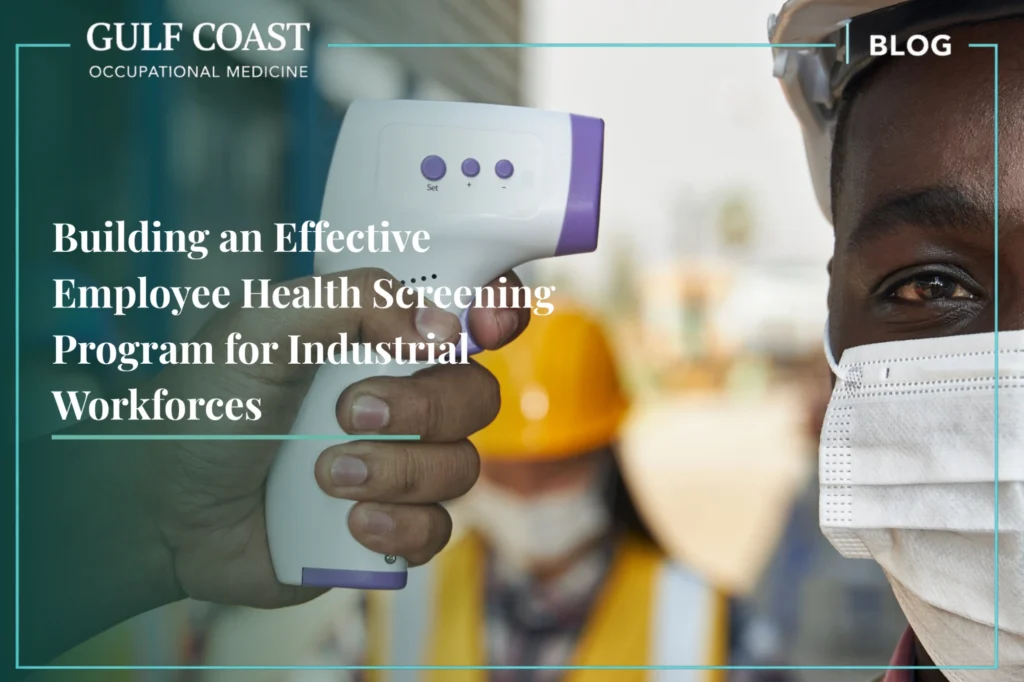
Learn how an employee health screening program helps industrial employers improve compliance, reduce injuries, lower costs, and build safer, more productive workforces.
The True Cost of Delayed Injury Reporting in the Workplace
Delayed workplace injury reporting increases claim costs, productivity losses, compliance risks, and legal exposure. Learn how proactive injury management protects employees and employers.
Walk-In Occupational Medicine Clinic in Baton Rouge for Employers and Employees
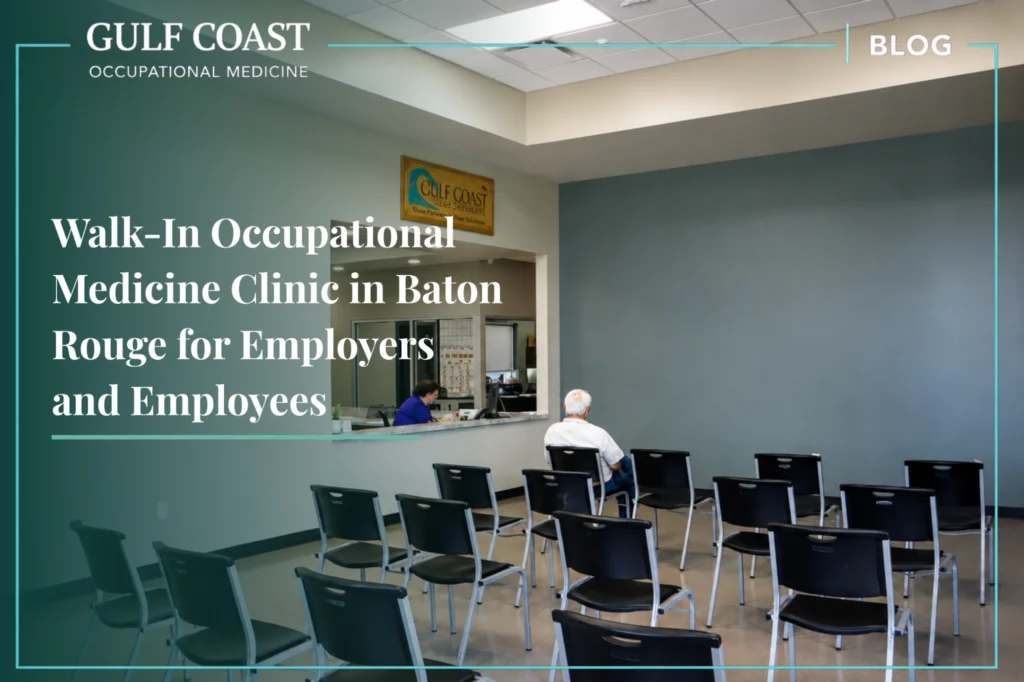
Learn how a walk-in occupational medicine clinic in Baton Rouge helps employers reduce downtime, improve compliance, manage workplace injuries, and keep employees healthy and productive.
