
Emergency Response Team Physicals: Employer Guide
Not Every Emergency Responder Belongs in the Same Medical Program An employee listed on an emergency plan is not automatically a member of an organized HAZMAT team. That distinction matters because an emergency response team’s physical and ongoing medical surveillance should be based on the employee’s actual duties, potential hazardous-substance exposure, respirator requirements, and the […]
Occupational Health for Multi-Site Workforces
One Workforce Should Not Have Five Different Health Processes As companies expand across jobsites, cities, or states, occupational health can become fragmented quickly. One location sends employees to a nearby clinic, another follows a different drug-testing process, and a third maintains its own spreadsheet for physicals, surveillance, and return-to-work documentation. A multi-site occupational health program […]
Build an OSHA Medical Surveillance Matrix
Stop Managing Medical Surveillance From Memory Medical surveillance becomes difficult to manage when exposure assessments, employee rosters, examination dates, and regulatory requirements live in separate spreadsheets or depend on someone remembering what comes next. A medical surveillance matrix creates a central administrative framework that connects job roles and workplace hazards with the applicable standard, surveillance […]
DOT Return-to-Duty Testing: Employer Checklist
A DOT Violation Starts a Defined Employer Process When a DOT-regulated employee has a drug or alcohol violation, the next step is not simply scheduling another test. DOT return-to-duty testing is one part of a larger process under 49 CFR Part 40 that involves the employer or Designated Employer Representative, a qualified Substance Abuse Professional, […]
Occupational Health Provider RFP Checklist
Choose a Provider for Your Workforce, Not Just the Nearest Clinic Selecting an occupational health vendor affects far more than where employees go for a physical or drug test. The provider may become part of injury response, workforce mobilization, medical surveillance, DOT testing, work-status communication, remote-project support, and employer reporting. A useful occupational health provider […]
DOT Alcohol Testing: Employer Requirements
Know Which DOT Rule Applies Before Ordering an Alcohol Test Employers managing commercial drivers and other transportation safety-sensitive workers need to understand both DOT alcohol testing requirements and the rule that applies to their specific workforce. 49 CFR Part 40 establishes the procedures used for DOT drug and alcohol testing, including who may conduct tests, […]
OSHA First Aid vs. Medical Treatment
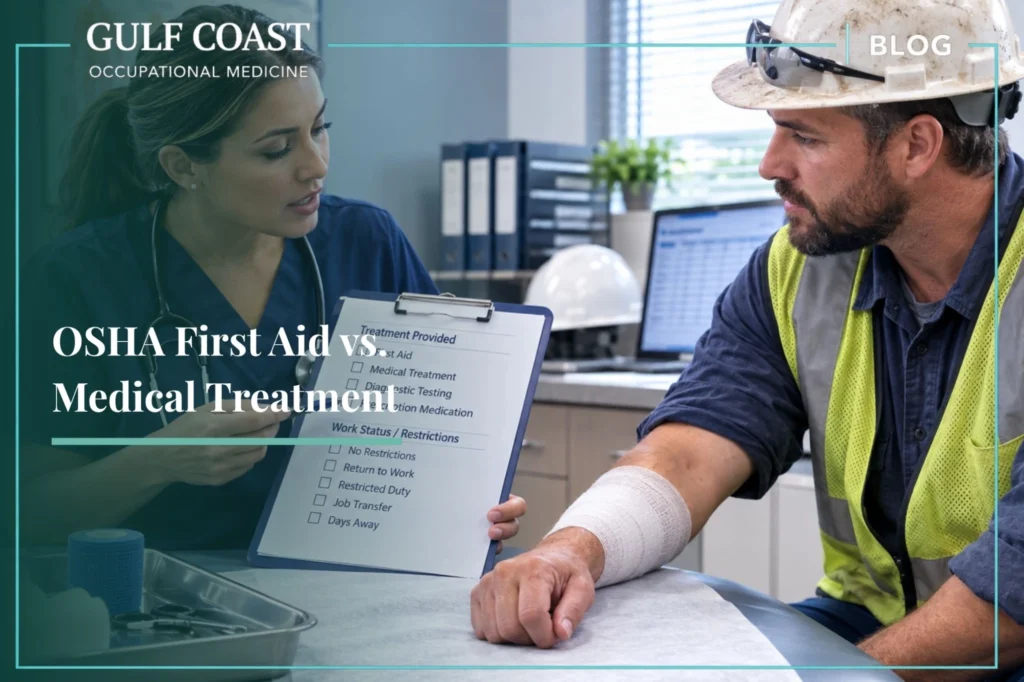
A Clinic Visit Does Not Automatically Make an Injury Recordable An employee gets hurt at work and is sent to a clinic. Does that automatically mean the injury belongs on the OSHA 300 Log? No. Understanding OSHA first aid vs medical treatment requires employers to look at what actually happened, whether the case is work-related […]
What an MRO Does After a Positive Drug Test
A Laboratory Result Is Not Always the Employer’s Final Result When an employer receives workplace drug-testing services, the laboratory is only one part of the process. For DOT-regulated testing, a laboratory-confirmed positive, adulterated, substituted, or invalid result normally goes to a Medical Review Officer before a final verified result is reported to the employer. A […]
Bloodborne Pathogen Exposure: Employer Response
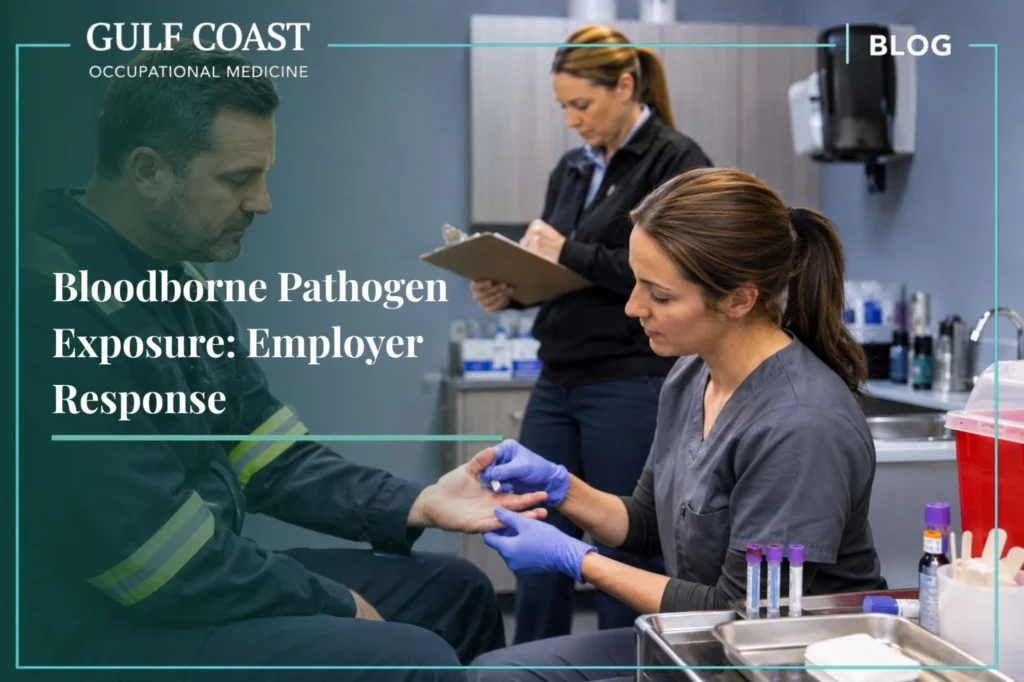
The First Minutes After a Blood Exposure Matter A needlestick, contaminated-sharps injury, blood splash to the eyes or mouth, or blood contact with non-intact skin requires more than an ordinary incident report. Employers whose workers have occupational exposure to blood or other potentially infectious materials need a bloodborne pathogens post-exposure protocol that moves quickly from […]
Silica Medical Exams: What Employers Must Provide
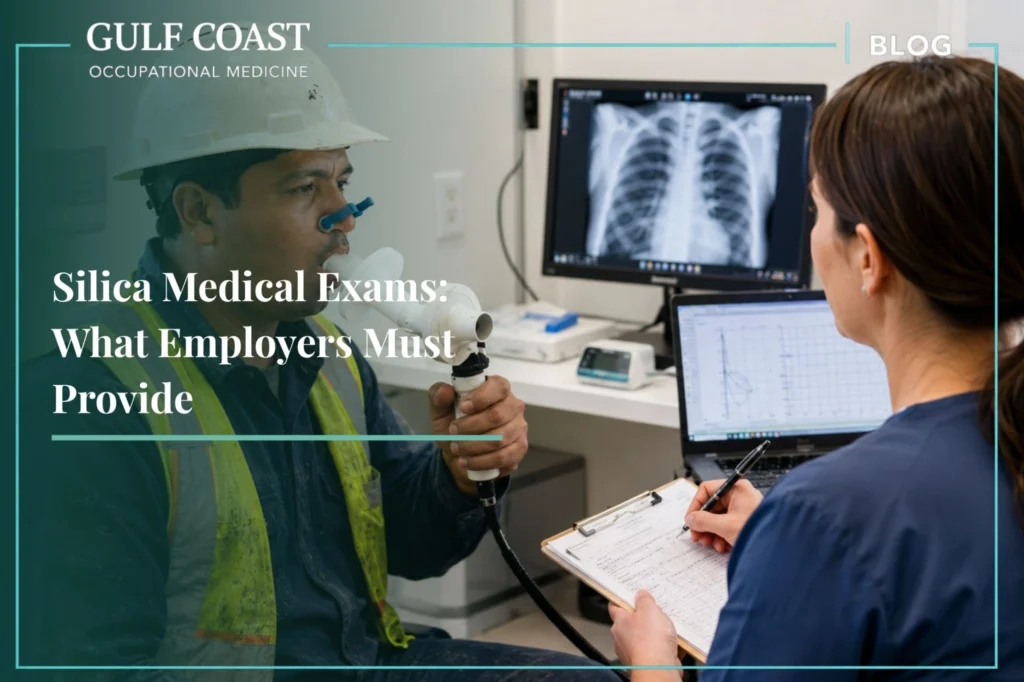
Silica Surveillance Starts With the Correct OSHA Trigger Cutting, sawing, grinding, drilling, and crushing materials such as concrete, stone, brick, block, and mortar can create respirable crystalline silica. For employers managing construction, manufacturing, maintenance, petrochemical, and other industrial work, identifying the exposure is only the first step. Employers must also determine whether OSHA’s silica medical […]
