
A Chemical Exposure Incident Raises Two Important Questions
An employee reports breathing chemical fumes during a maintenance task. Another worker experiences skin irritation after an unexpected splash. Both situations require attention, but do they require the same medical evaluation?
Workplace chemical exposure does not automatically mean every employee needs the same examination or laboratory test. The appropriate response depends on the chemical involved, exposure route, circumstances, symptoms, and applicable safety requirements. For EHS managers, HR teams, and industrial supervisors, the immediate priority is employee safety, followed by determining whether emergency treatment, occupational evaluation, or additional monitoring is needed.
Gulf Coast Occupational Medicine provides workplace injury care for Louisiana employers, helping organizations coordinate appropriate evaluation and follow-up after workplace incidents.
This guide explains how to make those decisions and prepare useful information for an occupational-health provider.
What Counts as Workplace Chemical Exposure?
Chemical exposure can occur during routine production, maintenance, cleaning, transportation, or an unexpected release.
Common exposure routes include:
- Inhalation: Breathing chemical vapors, gases, mists, fumes, or dust.
- Skin contact: Chemicals contacting exposed skin or penetrating contaminated clothing.
- Eye contact: Splashes, droplets, or airborne substances reaching the eyes.
- Ingestion: Accidentally swallowing a substance or transferring contamination from hands to the mouth.
A workplace risk assessment helps identify these possibilities before incidents occur. Employers can use GCOM’s workplace health risk assessment guidance to understand the broader hazard-identification process.
However, when exposure is suspected, the employer must move from identifying potential hazards to evaluating the actual incident.
What Should Employers Do After Suspected Chemical Exposure?
1. Protect Employees and Secure the Area
Stop the affected work, activate the site’s emergency response procedures, and move exposed employees away from danger when safe.
Do not send untrained employees into a contaminated area to rescue coworkers or clean up a hazardous release.
Severe breathing difficulty, unconsciousness, serious chemical burns, or other potentially life-threatening symptoms require emergency services. Call 911 rather than arranging routine occupational clinic care.
The CDC’s chemical emergency guidance explains the importance of getting away from contamination, removing chemicals from the body, and obtaining appropriate medical assistance.
2. Identify the Chemical and Review the Safety Data Sheet
Determine which substance or mixture was involved.
Under OSHA’s Hazard Communication Standard, Safety Data Sheets (SDS) provide important chemical information.
Review:
- Section 2: Hazard identification
- Section 4: First-aid measures
- Section 6: Accidental release measures
- Section 8: Exposure controls and personal protection
Follow the applicable SDS, site emergency procedures, and professional medical or poison-control instructions. First-aid measures vary by chemical.
3. Determine the Appropriate Medical Response
The supervisor should not independently decide that exposure was harmless merely because symptoms are absent.
Chemical-specific hazards, possible delayed effects, exposure circumstances, and professional guidance should determine whether an employee needs emergency evaluation or other medical assessment.
4. Record the Incident
Document the affected employees, chemical identity, task, exposure route, available monitoring information, and actions already taken.
Accurate records help medical professionals understand the circumstances and help employers investigate the workplace event.
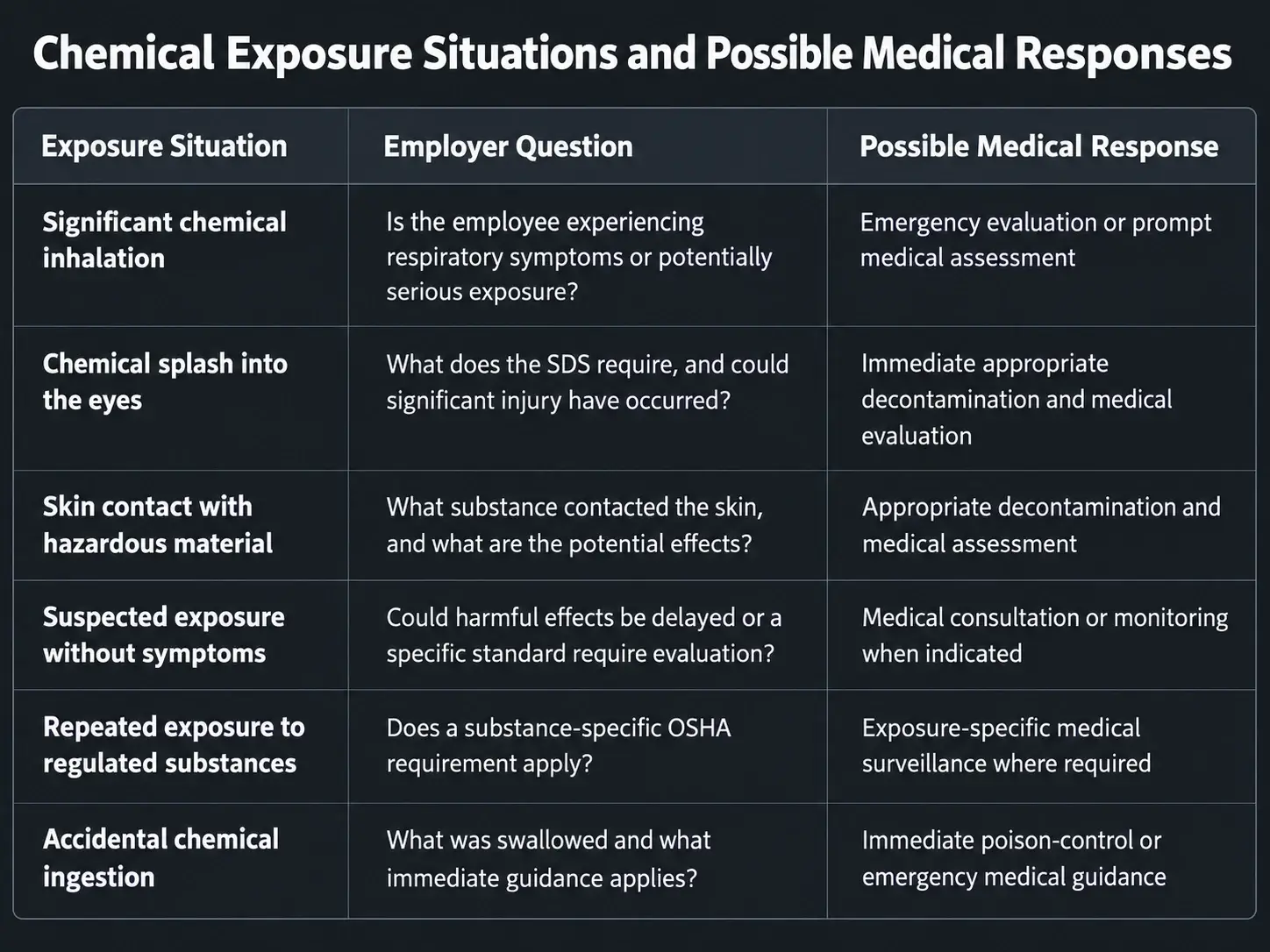
These examples are decision aids, not substitutes for a chemical-specific emergency response plan or medical judgment.
When Is an Occupational Health Medical Evaluation Needed?
Not every exposure requires identical medical testing. The decision should consider the chemical’s toxicity, exposure amount and duration, route of contact, symptoms, and the employee’s work circumstances.
For nonemergency situations, occupational-health professionals may evaluate an employee’s exposure history, current symptoms, and the need for further examination or follow-up.
OSHA also has substance-specific medical screening and surveillance requirements. Employers must determine whether a particular standard applies rather than assuming one screening protocol covers all chemical exposures.
For example, OSHA’s laboratory chemical exposure standard, 29 CFR 1910.1450, addresses medical consultation after certain exposure events in covered laboratories. Its requirements should not be treated as universal rules for every industrial workplace.
Medical surveillance is different from a one-time post-incident evaluation. Surveillance may involve ongoing, hazard-specific monitoring under an applicable regulation or program.
Employers can review GCOM’s guide to workplace exposure monitoring for information about assessing employee exposures and evaluating workplace controls.
Connect the Incident to the Right Occupational Health Service
Once immediate hazards have been addressed, employers may need help coordinating an employee’s evaluation, work-status documentation, or medical follow-up.
Gulf Coast Occupational Medicine offers occupational health and injury-care services for industrial employers. Sharing the relevant exposure details can help determine an appropriate clinic-based service and whether additional medical evaluation is necessary.
Chemical Exposure During Industrial Maintenance
A Louisiana manufacturing facility is performing scheduled equipment maintenance when a solvent container leaks.
Three employees report different circumstances. One was working near the release and noticed respiratory irritation. Another experienced limited skin contact. The third was outside the affected area.
The supervisor activates the site’s response procedures, secures the area, identifies the substance, and obtains the SDS.
The employer does not assume that all three employees require identical testing. Instead, the response considers each person’s potential exposure, symptoms, relevant medical guidance, and applicable requirements.
An occupational-health provider may become involved in evaluating nonemergency exposure concerns and determining whether medical follow-up is appropriate.
The employer separately investigates the leak and reviews engineering controls, handling procedures, and employee training.
This illustrates why individual exposure information is more useful than ordering the same examination for everyone.
What to Have Ready Before Scheduling an Evaluation
Employers preparing to discuss a suspected chemical exposure should gather the following information where available:
- Chemical or product name and SDS
- Date, time, and location of the incident
- Description of the work being performed
- Number of potentially exposed employees
- Possible exposure routes
- Estimated duration and available exposure measurements
- Symptoms reported by affected workers
- First aid or emergency treatment already provided
- Relevant personal protective equipment
- Applicable employer or regulatory requirements
- Job duties and potential work restrictions
- Employer safety or HR contact
This information can help a provider understand the exposure circumstances. Specific medical tests and follow-up requirements should be determined by qualified professionals.
Employers should also maintain appropriate confidentiality. Work-status information and authorized recommendations are not the same as unrestricted access to employees’ private medical records.
Frequently Asked Questions
Does every chemical exposure at work require a medical examination?
Not necessarily. Medical evaluation depends on the chemical, exposure circumstances, symptoms, professional guidance, and applicable regulations. Employers should not assume an exposure is harmless without assessing those factors.
Can an employee need medical evaluation without immediate symptoms?
Yes. Some chemical effects may be delayed, and certain regulations require medical consultation or surveillance under specified circumstances. The SDS and appropriate medical guidance help inform the decision.
What is the difference between chemical exposure monitoring and medical surveillance?
Exposure monitoring measures or estimates workplace exposure to hazardous substances. Medical surveillance evaluates employee health under an applicable exposure-related program. They serve different purposes and may be used together.
Can an occupational medicine clinic replace emergency medical services?
No. Serious chemical exposures and potentially life-threatening symptoms require emergency medical evaluation. Occupational medicine may support appropriate nonemergency assessments, documentation, and follow-up.
Coordinate the Right Medical Follow-Up After Chemical Exposure
A suspected chemical exposure should lead to a structured response based on employee safety, accurate exposure information, and appropriate medical guidance.
For employers managing industrial workforces in Baton Rouge and surrounding Louisiana communities, Gulf Coast Occupational Medicine can help coordinate occupational injury-care evaluations and related follow-up services when routine occupational care is appropriate.
Have the chemical information, incident details, employee job duties, and available exposure records ready before reaching out.
Call (225) 753-7233 or visit the Gulf Coast Occupational Medicine contact page to discuss your organization’s occupational-health needs.
Medical and regulatory note: This article provides general employer guidance, not individualized medical advice or a substitute for emergency response procedures. Employers remain responsible for applicable workplace safety requirements, and clinical decisions should be made by qualified healthcare professionals.
