
Switching Clinics Should Not Interrupt Employee Care
Your company is changing occupational health providers, but several employees have upcoming DOT physicals, medical surveillance appointments, and unresolved workplace injury evaluations. Who coordinates these services during the transition?
Switching occupational medicine providers requires more than selecting a new clinic. Employers must review existing services, pending examinations, medical documentation, and referral arrangements. Gulf Coast Occupational Medicine helps Louisiana employers coordinate workforce examinations, injury care, and occupational health services based on operational needs.
A structured transition can help HR and safety managers maintain visibility into employee requirements while establishing a new healthcare partnership.
Before moving employees to a new clinic, make sure the provider can support your examinations, testing programs, and ongoing workforce needs. Explore GCOM’s occupational health services.
Occupational Health Provider Transition
Considering Switching Occupational Medicine Providers?
Your new clinic should support your workforce’s examinations, testing, injury care, and scheduling needs. Explore Gulf Coast Occupational Medicine’s services before making the change.
When Should Employers Review Their Occupational Medicine Provider?
Employers may consider changing providers when existing arrangements no longer support workforce needs.
Common reasons include:
- Limited clinic access or appointment availability
- Difficulty coordinating employees across multiple job sites
- Inconsistent examination or testing instructions
- Delays in receiving appropriate work-status documentation
- Changing workforce size or service requirements
- Limited mobile or on-site medical capabilities
Before switching clinics, identify the specific problems that need improvement. This helps distinguish scheduling concerns from clinical capabilities or communication issues.
Inventory Current Medical Testing and Clinical Services
A successful occupational health clinic transition begins with a complete review of existing services.
Employers should identify which examinations and testing programs are currently active.
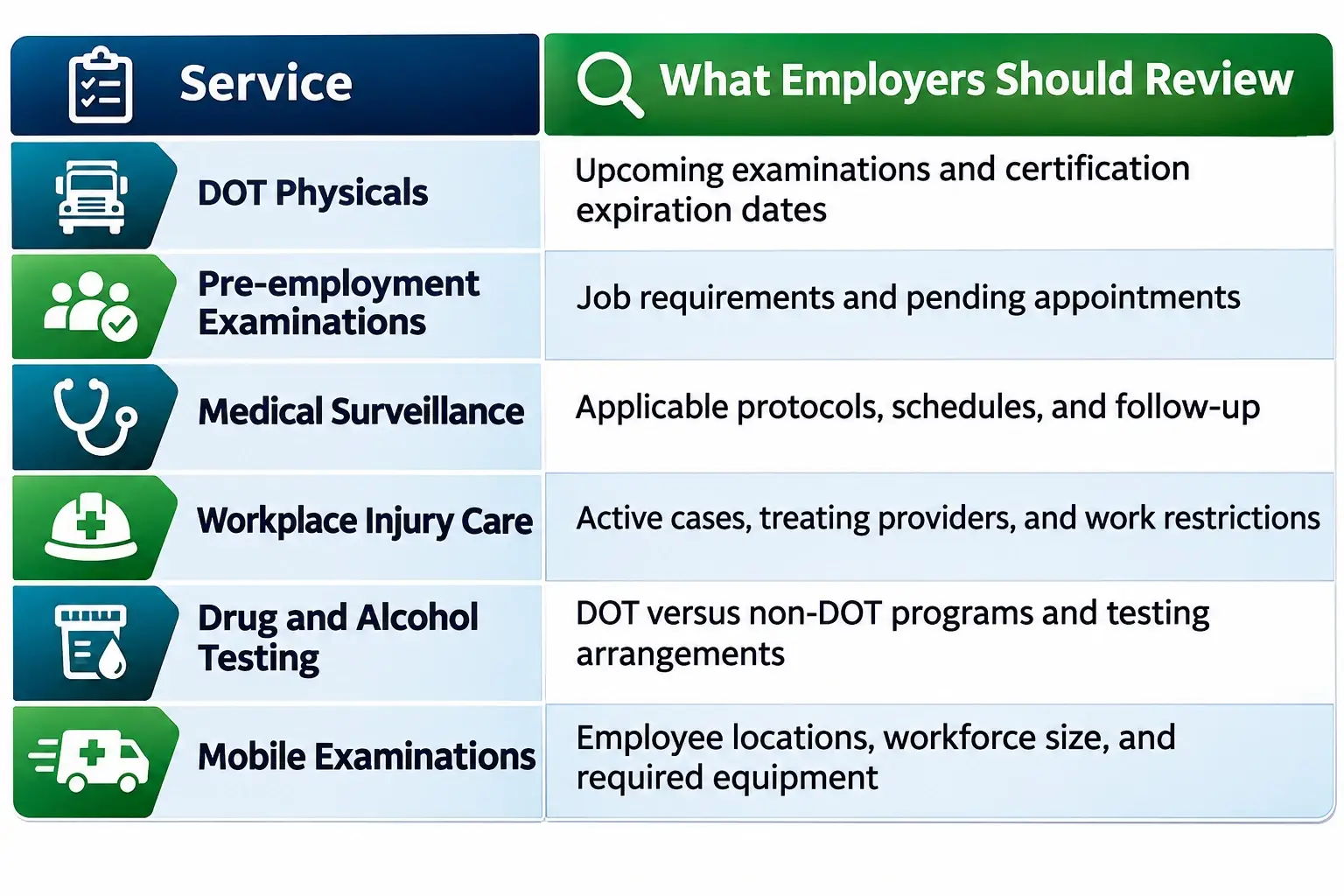
Each service may involve different documentation and regulatory requirements.
For example, DOT-regulated drug and alcohol testing follows specific recordkeeping and confidentiality rules under 49 CFR Part 40, Section 40.333.
Employers can compare these needs against GCOM’s occupational health services, including employee examinations, testing, workplace injury care, and mobile medical capabilities.
Plan Confidential Medical Records and Reporting Handoffs
Medical documentation is one of the most important considerations when changing clinics.
An employer should not assume that switching providers automatically transfers every employee’s medical record.
The U.S. Department of Health and Human Services explains that healthcare providers generally need an appropriate authorization or another permitted legal basis before disclosing protected medical information to employers.
However, HIPAA generally permits providers to share medical information with another healthcare provider for treatment without separate patient authorization, subject to applicable legal requirements.
What Should Employers Coordinate?
Before the changeover:
- Identify which employees have active medical cases or pending follow-up.
- Confirm which records must remain accessible.
- Establish appropriate medical record transfer procedures.
- Clarify employee authorization requirements when applicable.
- Identify who receives permitted employer reports and work-status updates.
Under OSHA’s 29 CFR 1910.1020, qualifying medical and exposure records have specific preservation and employee-access requirements.
Employers can review GCOM’s OSHA medical records retention guide for more information.
The transition should maintain appropriate documentation without giving HR staff unrestricted access to confidential clinical records.
Employer Transition Planning
Need Help Coordinating Your Clinic Transition?
A provider change involves more than scheduling new appointments. Review your pending exams, worksite locations, reporting needs, and ongoing care arrangements. GCOM can discuss an occupational health service plan suited to your workforce.
Compare Clinic Access, Mobile Services, and Coordination
An effective occupational medical provider comparison should consider more than proximity or appointment availability.
Evaluate potential providers using these criteria:
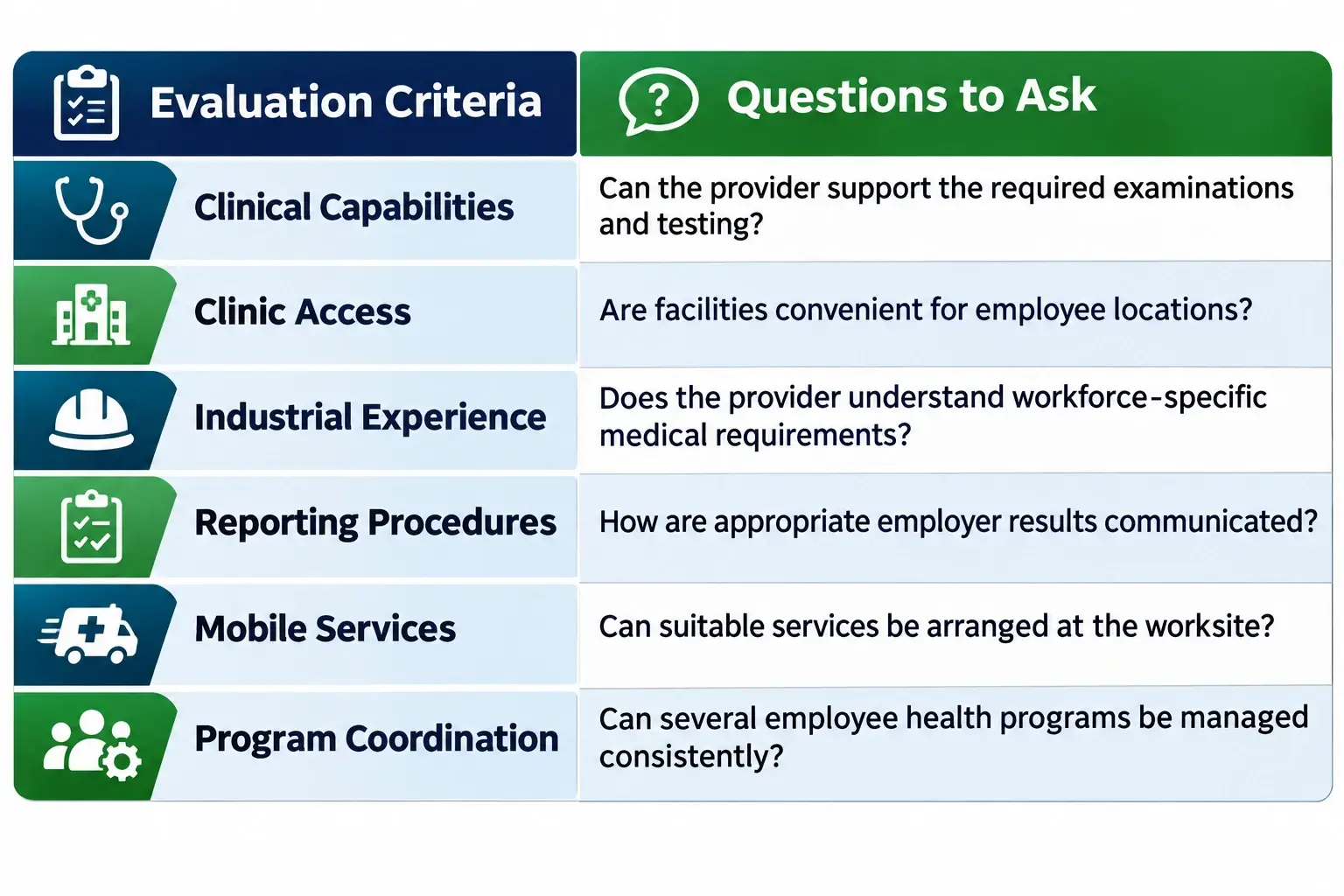
Clear employer occupational health service coordination can help reduce confusion when HR departments, safety teams, and multiple locations share responsibility for workforce testing.
GCOM provides clinic-based and mobile occupational health services. Employers can review Gulf Coast Occupational Medicine locations when evaluating accessibility for employees around Baton Rouge and surrounding Louisiana communities.
Service availability and scheduling arrangements should be confirmed for each location.
A Baton Rouge Contractor Changes Clinics
A Baton Rouge industrial contractor operates two worksites with employees requiring periodic examinations, drug testing, and workplace injury follow-up.
The company decides to change occupational health providers after experiencing scheduling and reporting difficulties.
Before switching, the safety manager:
- Reviews all active occupational health services.
- Identifies upcoming examination deadlines.
- Documents unresolved injury-care cases.
- Establishes appropriate medical record handoff procedures.
- Confirms the new provider’s clinic availability and reporting process.
The company schedules new examinations while maintaining appropriate care arrangements for employees with ongoing treatment needs.
This approach allows the contractor to organize the transition without losing visibility into outstanding workforce medical requirements.
What to Have Ready Before Switching Providers
When contacting a prospective occupational health clinic, having the following information ready can make discussions more productive:
- Approximate employee count and job roles
- Current occupational health services
- Employee locations and work schedules
- Upcoming examinations and expiration dates
- Open injury-care cases requiring coordination
- DOT, OSHA, or employer-specific program requirements
- Expected reporting and communication arrangements
This information helps a prospective provider understand the scope of the requested services.
Frequently Asked Questions
Can employers switch occupational health clinics at any time?
Generally, employers can change providers, but they should review existing contracts, ongoing treatment arrangements, regulatory requirements, and employee medical documentation before transitioning.
Do employee medical records automatically transfer to the new clinic?
No. Medical record transfers must follow applicable privacy requirements and appropriate procedures. Provider-to-provider sharing for treatment may be permitted without separate HIPAA authorization, while disclosures to employers follow different rules.
Should employees complete new examinations after switching providers?
Not automatically. The need for a new examination depends on the applicable regulatory program, existing medical documentation, clinical requirements, and examination validity.
Can a new provider coordinate multiple employer health programs?
Potentially. Employers should confirm the provider’s clinical capabilities, locations, reporting arrangements, and ability to support the specific programs their workforce requires.
Workplace Health Program Transition Checklist
Use this workplace health program transition checklist before moving to a new provider.
- Document current service requirements.
- Identify upcoming examinations and certification expirations.
- Review active workplace injury cases.
- Confirm medical record retention responsibilities.
- Establish appropriate record transfer procedures.
- Verify clinic locations and mobile service capabilities.
- Confirm testing instructions and reporting contacts.
- Establish referral arrangements for ongoing care.
- Communicate the transition to relevant employees and managers.
- Review outstanding appointments after implementation.
A coordinated transition helps employers identify potential service gaps before they affect employee scheduling or ongoing care.
Employer Occupational Health Services
Ready to Switch Occupational Health Providers?
Planning a clinic transition for your employees? Have your workforce size, locations, current medical services, and transition timeline ready. Gulf Coast Occupational Medicine can discuss available services and coordination options for your organization.
Find a GCOM Clinic
Visit Gulf Coast Occupational Medicine
Our Corporate Clinic is located at 15389 Airline Highway, Baton Rouge, LA 70817. Explore the map below or view our other Louisiana clinic locations.
Medical and regulatory note: Employers remain responsible for applicable workplace safety, recordkeeping, and privacy requirements. Medical record access and transfers must follow applicable laws and authorizations. Changes in healthcare providers should not interrupt medically necessary treatment or follow-up.
