
Managing Workforce Health Across Multiple States
Your Louisiana crew has completed its medical screenings, but employees assigned to projects in Texas and another state still need examinations. Different clinic arrangements, job requirements, and project deadlines can make workforce mobilization difficult to coordinate.
Nationwide workforce readiness helps employers organize occupational health services across multiple locations through consistent planning, appropriate providers, and clearer documentation processes. As a founding partner of NuREADY Health Network, Gulf Coast Occupational Medicine helps businesses access coordinated occupational health resources across the Gulf Coast and beyond.
What Is Nationwide Workforce Readiness?
Nationwide workforce readiness is an approach to coordinating employee health requirements across geographically dispersed operations.
Instead of arranging every examination independently, employers can work with an occupational health network to organize services based on workforce size, job responsibilities, locations, and project schedules.
This approach can support:
- Employee medical examinations and screenings
- DOT physicals and drug testing programs
- Occupational medical surveillance
- Mobile and on-site health services
- Project mobilization and workforce preparation
- Safety training and appropriate telehealth support
The objective is a more organized process, not identical medical requirements for every employee.
Why Multi-State Employers Need Coordinated Occupational Health
Companies operating across multiple states often deal with different providers, appointment arrangements, and documentation processes.
For HR directors and EHS managers, these differences can make it harder to confirm which employees have completed the appropriate examinations before their assignments begin.
Three challenges deserve particular attention.
Different Workforce Requirements
A commercial driver, industrial maintenance technician, and administrative employee may have different medical requirements.
Employers must distinguish regulatory requirements from company policies and job-specific assessments.
Limited Access to Specialized Clinics
Some remote construction sites and industrial projects are far from occupational health facilities.
Mobile medical units or qualified local provider partnerships may offer practical alternatives, depending on the service and location.
Inconsistent Documentation
Employers need accurate scheduling records, certification dates, and appropriate work-status documentation.
A consistent coordination process can reduce administrative confusion without giving employers unrestricted access to confidential medical information.
How Gulf Coast Occupational Medicine and NuREADY Support Employers
NuREADY Health Network was established by Gulf Coast Occupational Medicine and Business Health Partners to connect occupational health expertise, clinical resources, and service capabilities.
GCOM maintains its Louisiana operations while participating in a broader network supporting multi-location employers.
Through this partnership, organizations can explore several service arrangements.
Coordinated Clinic Services
GCOM and its network partners provide access to occupational health clinics in Louisiana and Texas, with additional coordination through provider partnerships.
Employers can review GCOM clinic locations when planning regional employee appointments.
Mobile Occupational Health
Mobile services may bring suitable examinations, screenings, and testing closer to industrial worksites.
For large employee groups or remote projects, this can reduce unnecessary travel and simplify scheduling. Employers can also review when mobile occupational health services make sense.
Telehealth and Training
NuREADY also offers telehealth consultation and workforce safety training through its network.
Telehealth can support appropriate medical consultations and coordination, but it does not replace examinations or procedures requiring in-person evaluation.
Specific capabilities and availability should be confirmed for each project.
Planning workforce health services across several states? Gulf Coast Occupational Medicine can discuss your employee locations, required services, and project schedule to explore an appropriate NuREADY coordination arrangement.
Occupational Health Services for Nationwide Workforce Operations
Employers should begin by determining which services actually apply to their workers.
The NuREADY occupational health network includes capabilities such as:
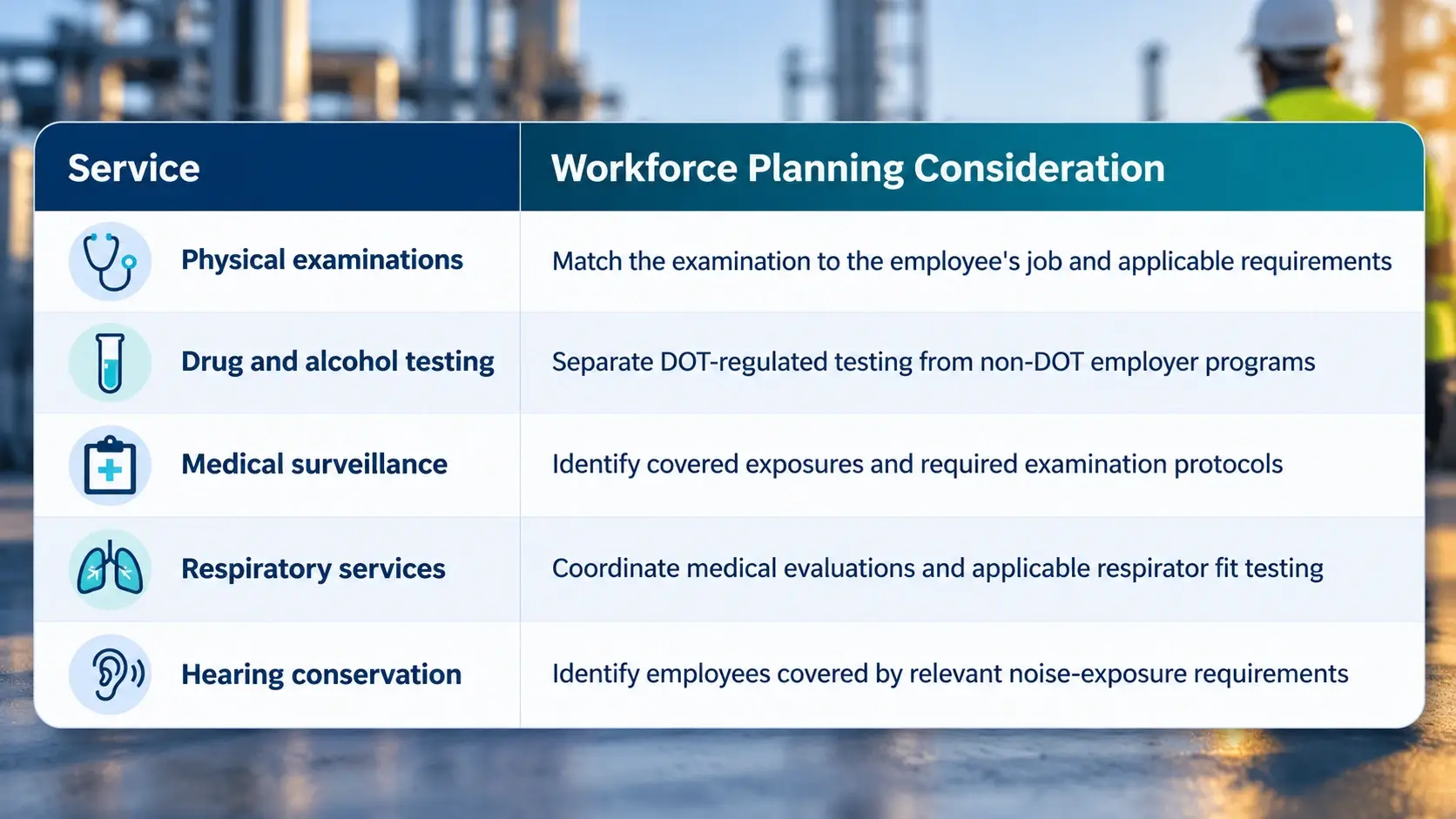
For example, OSHA’s medical surveillance guidance explains that surveillance requirements depend on applicable workplace standards.
Under 29 CFR 1910.134, employees required to use respirators must receive appropriate medical evaluation before fit testing or required respirator use.
Similarly, applicable commercial-driver medical qualification requirements should be reviewed using FMCSA medical program guidance.
Important: A nationwide service network can support program coordination, but employers retain responsibility for determining and meeting their regulatory obligations.
Choosing the Right Occupational Health Delivery Model
Not every workforce needs the same service arrangement.
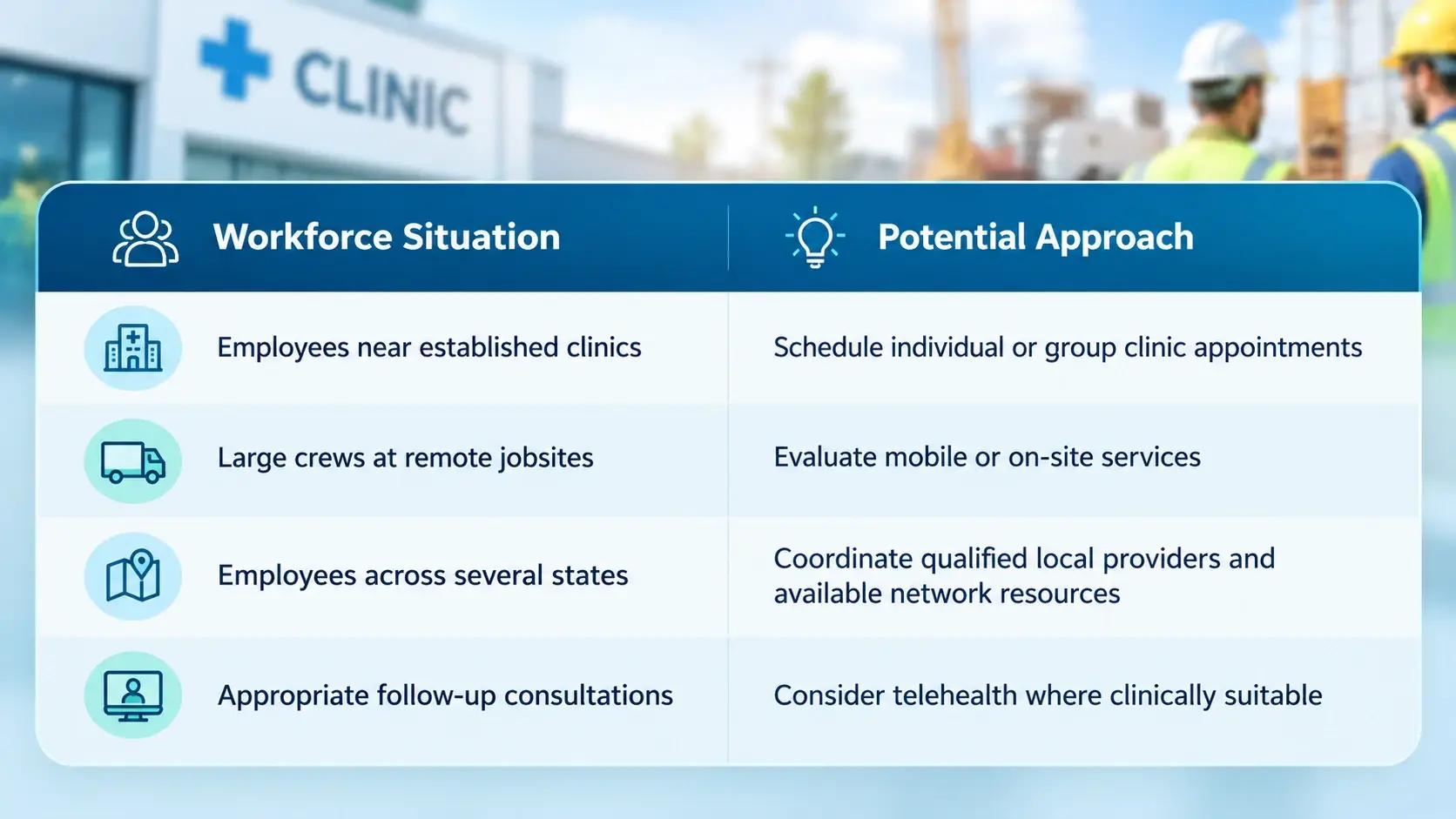
Before selecting an approach, confirm service availability, required equipment, provider qualifications, and reporting arrangements.
This helps employers choose a delivery model based on actual workforce needs rather than convenience alone.
Preparing a Multi-State Industrial Workforce
An industrial contractor is preparing employees for projects in Louisiana, Texas, and Tennessee.
The workforce includes commercial drivers, maintenance technicians, supervisors, and administrative personnel.
The safety manager first identifies which employees need DOT physicals, drug testing, or exposure-based medical surveillance.
Next, the company organizes employee rosters by location and requested service.
Clinic appointments may work for smaller groups. A mobile deployment could be evaluated for a larger workforce at a remote site, while qualified partner clinics may help with workers in other states.
Before deployment, the employer reviews required work-status documentation and addresses any outstanding examinations.
This coordinated approach helps the contractor manage separate jobsite requirements through one workforce planning process.
What to Have Ready Before Requesting Nationwide Services
Before contacting an occupational health provider, employers should organize:
- Estimated employee count and work locations
- Job roles and required medical services
- Applicable DOT, OSHA, or employer-specific programs
- Project start dates and screening windows
- Current examination or certification expiration dates
- Clinic, mobile, or on-site service preferences
- Employer contacts responsible for coordination
Having this information ready can help GCOM and NuREADY understand the requested scope and evaluate suitable service arrangements.
Nationwide Workforce Readiness Planning Checklist
Use this checklist before your next multi-state project or workforce deployment.
- Identify all worksites and employee groups.
- Determine which medical requirements apply to each job role.
- Review existing examination and certification records.
- Identify upcoming screening and renewal dates.
- Compare clinic-based and mobile service options.
- Confirm provider capabilities in each location.
- Establish scheduling and documentation responsibilities.
- Review outstanding cases before workforce mobilization.
For ongoing projects, revisit the checklist whenever workforce assignments, job hazards, or project locations change.
Frequently Asked Questions
Can one occupational health network support employers in several states?
Yes. Networks such as NuREADY combine established clinics, mobile services, and provider partnerships to support multi-location employers. Specific arrangements depend on workforce needs and service availability.
Are medical screening requirements identical across states?
No. Applicable federal requirements, state rules, employee responsibilities, workplace hazards, and employer policies can differ. Organizations should confirm which requirements apply to each workforce group.
Can mobile occupational health services support remote projects?
Yes, where appropriate equipment, staffing, and services are available. Mobile delivery may be useful for remote locations or larger employee groups.
Can NuREADY coordinate medical screenings before project mobilization?
NuREADY identifies project mobilization and workforce medical coordination among its network capabilities. Employers should provide workforce size, locations, service requirements, and target dates to discuss a suitable plan.
Coordinate Nationwide Workforce Readiness With GCOM
Managing employees across multiple states requires clear planning, appropriate medical services, and reliable coordination.
Through its founding partnership in NuREADY Health Network, Gulf Coast Occupational Medicine helps employers explore nationwide occupational health solutions supported by clinic resources, mobile capabilities, and provider partnerships.
Preparing employees for projects across several states?
Have your workforce size, locations, required screenings, and project schedule ready.
Call (225) 753-7233 or contact Gulf Coast Occupational Medicine to discuss your nationwide workforce readiness needs and available coordination options.
Medical and regulatory note: Occupational health requirements vary by job, exposure, jurisdiction, and applicable regulation. Clinical determinations must be made by qualified healthcare professionals, and employers remain responsible for their compliance obligations.
