
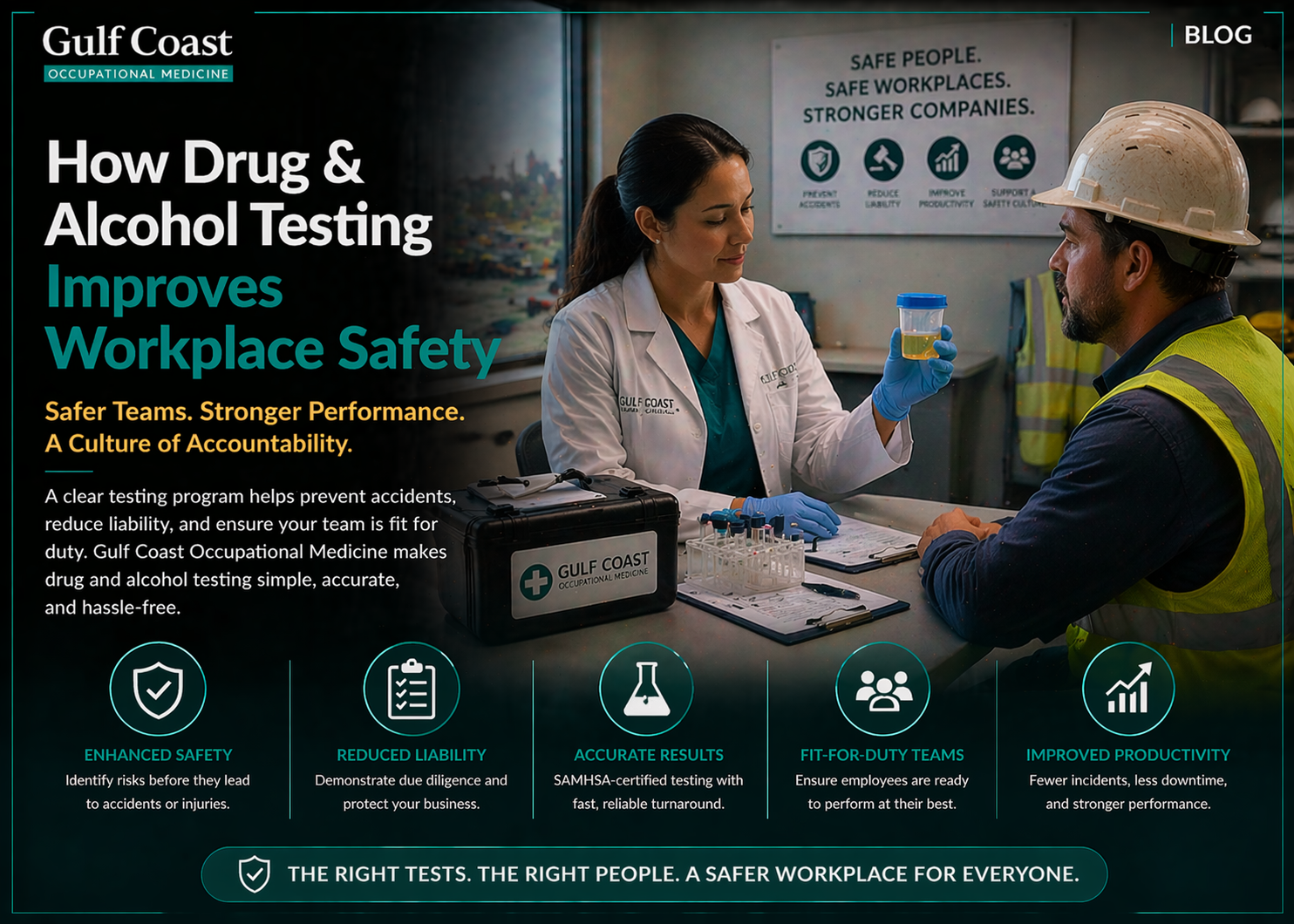
Drug and alcohol testing plays a critical role in improving workplace safety, especially in industries where employees operate heavy machinery, drive commercial vehicles, or work in high-risk environments. Employers across the United States rely on structured testing programs to reduce accidents, protect employees, and maintain compliance with federal and state safety regulations.
A safe workplace is not only about equipment and policies it is about ensuring workers are physically and mentally fit to perform their duties. Substance misuse can impair judgment, slow reaction time, and increase the likelihood of costly and dangerous incidents on the job.
The Link Between Substance Use and Workplace Accidents
Workplace accidents caused by substance impairment are more common than many employers realize. Employees under the influence of drugs or alcohol are significantly more likely to:
-
Make critical errors
-
Ignore safety protocols
-
React slowly in emergency situations
-
Cause injuries to themselves or coworkers
Industries such as construction, oil and gas, manufacturing, transportation, and logistics face even higher risks. One impaired worker can jeopardize an entire job site, damage expensive equipment, and expose an employer to legal and financial consequences.
This is why professional drug and alcohol screening programs are a cornerstone of modern occupational health strategies for employers seeking safer, more productive workplaces.
How Drug and Alcohol Testing Prevents Workplace Incidents
A well-implemented testing program acts as both a preventive and corrective measure. Employees are more likely to follow safety rules when they know testing is in place, and employers can identify risks before accidents occur.
Key benefits include:
-
Early detection of impairment before it leads to injury
-
Reduced on-the-job accidents and near-miss incidents
-
Lower workers’ compensation claims
-
Improved compliance with DOT and OSHA requirements
Testing programs also promote accountability. When employees understand that safety is taken seriously, it reinforces a culture of responsibility and professionalism across the organization.
Types of Drug and Alcohol Testing That Support Safety
Different testing methods serve different safety purposes. Employers often use a combination of the following to maintain a safe and compliant workforce:
Pre-Employment Testing
Screens candidates before hiring, helping ensure new employees meet safety standards from day one.
Random Testing
Acts as a strong deterrent against substance use, especially in safety-sensitive roles.
Post-Accident Testing
Identifies whether impairment played a role in an incident, protecting employers during investigations and claims.
Reasonable Suspicion Testing
Allows supervisors to take immediate action when impairment is suspected, preventing escalation.
Return-to-Duty Testing
Confirms an employee is fit to safely return to work after a violation or rehabilitation program.
Each of these testing types directly supports accident prevention and safer job sites.
Improving Productivity and Reducing Downtime
Substance misuse doesn’t only affect safety—it also impacts productivity. Impaired employees are more likely to miss work, underperform, or require disciplinary action. These issues increase operational costs and disrupt workflow.
Drug and alcohol testing helps employers:
-
Maintain consistent productivity
-
Reduce absenteeism and turnover
-
Minimize unplanned downtime
-
Protect company reputation
A healthier workforce is a more reliable workforce. Over time, testing programs contribute to stronger operational performance and better employee morale.
Legal Protection and Regulatory Compliance
Many employers are required by law to conduct drug and alcohol testing. DOT-regulated industries must follow strict federal testing guidelines, while OSHA emphasizes employer responsibility to maintain safe working conditions.
Proper testing programs help organizations:
-
Meet DOT and OSHA compliance requirements
-
Reduce liability in the event of accidents
-
Strengthen legal defense during claims or audits
-
Demonstrate due diligence in safety management
Failing to implement testing can expose employers to penalties, lawsuits, and regulatory violations that could have been prevented.
Building a Safety-First Workplace Culture
Beyond compliance, testing reinforces a safety-first mindset. Employees feel more secure knowing their coworkers are held to the same safety standards. This trust improves teamwork and communication on the job.
When drug and alcohol testing is paired with education and clear policies, it becomes a proactive tool—not a punishment. Employers who communicate expectations clearly often see better cooperation and fewer incidents over time.
Partnering With an Occupational Health Provider
The effectiveness of a testing program depends on accuracy, confidentiality, and timely reporting. Partnering with an experienced occupational health provider ensures testing is conducted correctly and efficiently, whether at a clinic or on-site at the job location.
Professional providers offer:
-
Certified testing procedures
-
Fast, reliable results
-
Mobile and on-site testing options
-
Compliance-ready documentation
This support allows employers to focus on operations while maintaining a safer work environment.
Take the Next Step Toward a Safer Workplace
If your organization is serious about reducing accidents, improving compliance, and protecting your workforce, professional drug and alcohol testing is a proven solution.
Book your appointment today with Gulf Coast Occupational Medicine to implement reliable testing programs tailored to your industry.
📞 Call now: +1 (225) 753-7233 to speak with an occupational health expert and strengthen workplace safety before incidents occur.
