
For many employers, staying compliant with workplace safety regulations can feel complicated. Documentation requirements grow, regulations evolve, and even a small oversight can create legal or financial risk.
However, understanding Occupational Safety and Health Administration (OSHA) medical requirements can make compliance much simpler.
The key is understanding which medical programs apply to your workforce and partnering with the right occupational health provider.
Understanding OSHA Medical Surveillance Requirements
The Occupational Safety and Health Administration requires employers to provide a safe working environment. In some industries, this includes medical surveillance programs when workers are exposed to certain hazards.
Medical surveillance means regular health evaluations designed to monitor workers exposed to workplace risks.
Examples of programs OSHA may require include:
- Respirator medical evaluations and fit testing
- Hearing conservation testing for high-noise environments
- Medical monitoring for exposure to hazardous substances
- Injury reporting and recordkeeping requirements
These programs help ensure employees can safely perform their jobs while protecting employers from compliance violations.
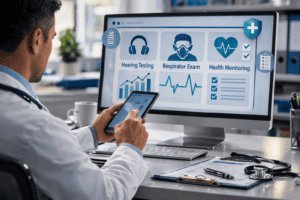
Common Workplace Medical Programs Employers Use
In addition to OSHA requirements, many employers implement workplace health programs to protect their workforce and reduce liability.
Common occupational health services for employers include:
- DOT physical exams for commercial drivers
- Respirator medical evaluations and fit testing
- Pre-employment physicals
- Annual health surveillance exams for certain job roles
- Post-incident drug and alcohol testing when appropriate
These programs help employers identify risks early and maintain safer workplaces.
Workplace Injury Care and Compliance Documentation
When workplace injuries occur, proper evaluation and documentation are critical.
OSHA requires employers to maintain injury and illness records, including the OSHA 300 log and related documentation. Accurate records help employers monitor workplace safety and demonstrate compliance during inspections.
Delays in evaluation or incomplete paperwork can lead to:
- Regulatory fines
- Increased workers’ compensation costs
- Extended employee downtime
Fast workplace injury care and compliance documentation help reduce risk and support quicker recovery for injured employees.
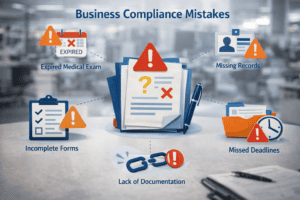
Common Compliance Mistakes Employers Make
Even well-managed companies can experience compliance issues due to simple oversights.
Common mistakes include:
- Delaying post-incident testing or injury evaluation
- Failing to track expiration dates for required exams
- Incomplete documentation of workplace injuries
- Using medical providers unfamiliar with occupational health regulations
These small issues can lead to costly compliance problems if not addressed early.
Why Employers Partner with Occupational Health Providers
An occupational medicine provider understands employer compliance responsibilities and workplace health regulations.
Instead of reacting to injuries or inspections, businesses can create proactive compliance systems.
Gulf Coast Occupational Medicine works directly with employers to:
- Streamline required exams and screenings
- Maintain accurate documentation
- Provide rapid workplace injury care
- Reduce operational downtime
Partnering with an experienced occupational medicine clinic simplifies compliance and allows businesses to focus on operations.
Protect Your Workforce and Your Business
Compliance is not just about avoiding fines. It helps protect employees, improve workplace safety, and reduce operational risk.
If you manage workplace safety or human resources, working with an occupational health provider can simplify OSHA medical surveillance requirements and workplace injury management.
Contact Gulf Coast Occupational Medicine to learn how your company can strengthen workplace safety and compliance.
