
Understanding the Difference Between Medical Clearance and Fit Testing
Respiratory hazards are common throughout Louisiana industries, including refineries, petrochemical plants, manufacturing facilities, construction sites, industrial contractors, and transportation operations. Employees working around dust, silica, fumes, chemical vapors, and other airborne contaminants often require respiratory protection to perform their jobs safely.
One of the most common compliance mistakes employers make is assuming that respirator medical clearance and respirator fit testing are the same requirement. In reality, OSHA generally requires both as part of a compliant respiratory protection program. Failing to complete either requirement can expose workers to health risks, increase liability, and potentially result in OSHA citations. Gulf Coast Occupational Medicine helps employers throughout Baton Rouge, Gonzales, Geismar, Reserve, Walker, and Addis stay compliant with OSHA respiratory protection requirements through comprehensive occupational health services. Learn more at Gulf Coast Occupational Medicine.
Understanding OSHA Respiratory Protection Requirements
Overview of OSHA Standards
OSHA’s Respiratory Protection Standard, 29 CFR 1910.134, requires employers to establish respiratory protection programs whenever employees are exposed to airborne hazards that cannot be adequately controlled through engineering or administrative measures.
Common workplace hazards include:
- Silica dust
- Chemical vapors
- Welding fumes
- Asbestos
- Industrial particulates
- Hazardous dust exposure
Industries commonly requiring respiratory protection programs include:
- Oil and gas
- Refineries
- Petrochemical facilities
- Manufacturing plants
- Construction companies
- Maritime operations
- Industrial contractors
Compliance helps protect employees, reduce occupational illness risks, and satisfy refinery and contractor safety requirements.
What Is Respirator Medical Clearance?
Definition
Respirator medical clearance is the process of determining whether an employee can safely wear a respirator while performing job duties.
Why Medical Clearance Is Required
Respirators place additional physical demands on the body. Wearing a respirator may affect breathing, heart rate, and overall exertion levels. OSHA requires employers to determine whether employees are medically capable of wearing respirators before they begin using them.
What the Evaluation Includes
Medical Questionnaire
Employees complete an OSHA-approved questionnaire that reviews:
- Medical history
- Respiratory conditions
- Cardiovascular health
- Current symptoms
Clinical Evaluation
Additional examinations may be required if concerns are identified during the questionnaire review.
Physician Review
A licensed healthcare professional evaluates the results and determines whether the employee is medically qualified to wear a respirator.
Possible Outcomes
- Cleared for respirator use
- Cleared with restrictions
- Additional evaluation required
- Not medically cleared
Medical clearance must generally occur before respirator use begins and may need updating if health conditions change.
What Is Respirator Fit Testing?
Definition
While medical clearance evaluates employee health, respirator fit testing verifies that the respirator properly seals against the employee’s face.
Purpose of Fit Testing
Fit testing helps:
- Confirm respirator effectiveness
- Identify leaks
- Verify proper size and model selection
- Improve worker protection
According to NIOSH, proper respirator fit is essential to ensuring that respiratory protection performs as intended.
OSHA Requirements for Fit Testing
OSHA requires fit testing:
- Before first respirator use
- Annually thereafter
- When facial features change
- Following significant weight changes
- After facial surgery
- When switching respirator models
Types of Fit Testing
Qualitative Fit Testing
Uses taste or smell agents to identify leakage and is commonly used for certain respirator types.
Quantitative Fit Testing
Uses specialized instruments to measure leakage and provide objective fit data. This method is often preferred in higher-risk industrial environments.
Employers searching for respirator fit testing Louisiana services often require both methods depending on worksite requirements.
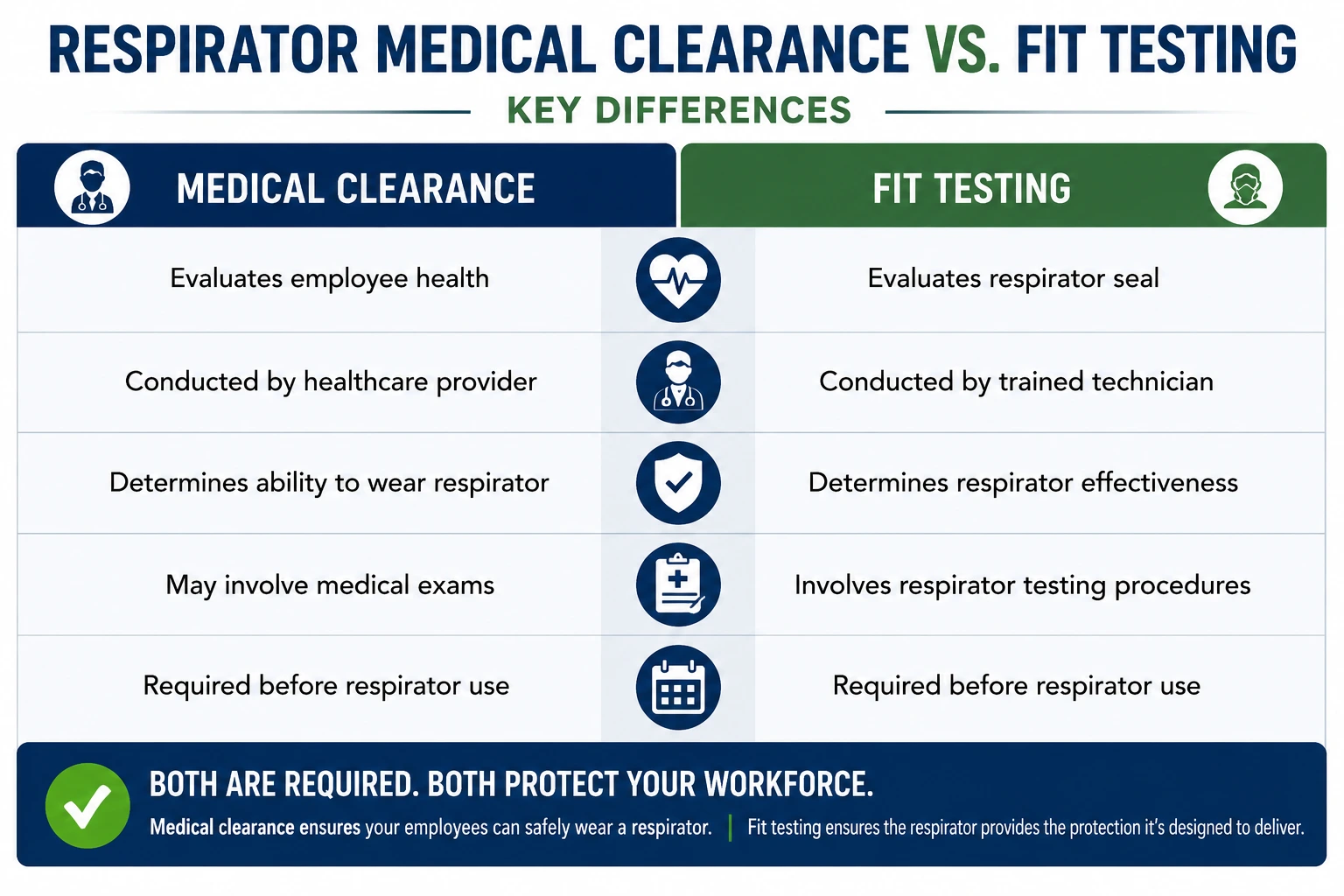
Respirator Medical Clearance vs. Fit Testing: Key Differences
Common Employer Misunderstandings
Many employers mistakenly believe:
- Fit testing replaces medical clearance
- One service satisfies OSHA requirements
- Annual fit testing is optional
- Documentation is unnecessary
In reality, both requirements serve different purposes and are generally necessary for OSHA compliance.
Which Service Comes First?
OSHA Compliance Sequence
Step 1: Medical Clearance
Employees must first complete respirator medical clearance before proceeding to fit testing.
Step 2: Fit Testing
Once medically cleared, employees undergo fit testing using the respirator they will wear on the job.
Step 3: Respirator Training
Employees receive training on:
- Proper use
- Inspection procedures
- Maintenance requirements
- Storage practices
Following the correct sequence helps employers avoid compliance issues while protecting worker health.
Need Respirator Compliance Support?
If your workforce requires respirators for upcoming projects, turnarounds, shutdowns, or contractor work, Gulf Coast Occupational Medicine provides both medical clearances and respirator fit testing Baton Rouge services to help keep employees compliant and job-ready.
Visit our Occupational Health Services page to learn more.
Employers That Commonly Need Both Services
The following industries frequently require both medical clearance and fit testing:
Refinery Contractors
- Turnarounds
- Shutdown projects
- Maintenance operations
Manufacturing Facilities
- Chemical processing
- Production environments
Construction Companies
- Concrete cutting
- Demolition projects
- Silica exposure operations
Industrial Service Providers
- Welders
- Painters
- Sandblasters
- Tank cleaning crews
Municipal and Utility Workers
- Wastewater operations
- Utility maintenance projects
Businesses can strengthen overall compliance efforts by reviewing resources such as Top 10 Occupational Health Services You Should Know and When Do Companies Need Mobile Occupational Health Services?.
Consequences of Non-Compliance
Failure to maintain a compliant respiratory protection program can result in:
OSHA Citations and Penalties
Non-compliance may lead to citations, fines, and increased regulatory scrutiny.
Worker Health Risks
Inadequate respiratory protection can contribute to:
- Respiratory illness
- Occupational disease
- Long-term health complications
Project Delays
Contractors may lose access to job sites if workers lack required documentation.
Increased Liability
Employers may face:
- Workers’ compensation claims
- Legal exposure
- Productivity losses
How Gulf Coast Occupational Medicine Helps Louisiana Employers Stay Compliant
Respirator Medical Clearance Services
Gulf Coast Occupational Medicine provides OSHA-compliant evaluations with fast turnaround times to support workforce readiness.
Respirator Fit Testing Services
Available services include:
- Qualitative fit testing
- Quantitative fit testing
- Annual compliance support
Employer Benefits
- Reduced employee downtime
- Streamlined onboarding
- Improved OSHA compliance
- Enhanced workforce readiness
Businesses throughout Baton Rouge, Gonzales, Geismar, Reserve, Walker, Addis, and Louisiana’s Industrial Corridor rely on Gulf Coast Occupational Medicine for occupational health support.
Employers can also explore resources such as Mobile vs. Clinic Occupational Health Comparison and Common Workplace Injuries and Prevention Strategies.
Real-World Example
A Louisiana industrial contractor preparing for a refinery turnaround needed over 100 employees cleared and fit tested within a limited timeframe. By coordinating services through Gulf Coast Occupational Medicine, the company streamlined onboarding, reduced delays, and met site access requirements before project launch.
Protect Workers and Stay OSHA Compliant
Understanding the difference between respirator medical clearance and respirator fit testing is essential for maintaining a compliant respiratory protection program. Medical clearance evaluates whether employees can safely wear respirators, while fit testing verifies that the respirator provides an effective seal and proper protection.
For Louisiana employers, contractors, safety managers, and industrial operators, both services are critical to protecting workers, maintaining compliance, and avoiding costly project delays. Gulf Coast Occupational Medicine provides comprehensive respiratory protection services throughout Baton Rouge and the surrounding Industrial Corridor.
Schedule Respirator Medical Clearance and Fit Testing Before Your Next Project
Don’t wait until onboarding, shutdowns, or turnarounds begin. Contact Gulf Coast Occupational Medicine today through the Contact Us page to schedule respirator medical clearances and fit testing services for your workforce.
Frequently Asked Questions
Is respirator medical clearance required every year?
Not necessarily. Reevaluation is generally only required if health conditions change or a healthcare provider recommends it.
How often is respirator fit testing required?
OSHA generally requires annual fit testing for employees who wear respirators.
Can an employee be fit tested without medical clearance?
No. Employees must first complete medical clearance before fit testing can occur.
What happens if an employee fails a fit test?
Alternative respirator models or sizes can be evaluated until an acceptable fit is achieved.
